Kai-yendhi bhavan at its best…Matta you say?

When we were kids, R and I were often asked if we were twins because we are pretty close in age, hung out a lot together, and always looked out for each other via some sixth sense. I think the last part still holds though we do not hang out anywhere near enough (a few oceans separate us physically) and it has been a while since anyone asked if we were twins.

As kids, R and I spent hours riding our bikes in the Ashok Nagar / KK Nagar area and had many an adventure. Manthoppu colony, Postal colony, Ayodhya mandapam, ESI, Pillar, MGRnagar – you name the street in that area and we have ridden our bikes there. There is a saying in Tamil – “Kamban ( a great Tamil poet) veetu kattu thariyum kavi paadum“, meaning “Even Kamban’s loom can pen a poem”.  Like that, even the roads of Ashok nagar and KK nagar will sing our stories since our childhood was a blast.

One of the places we frequented was Matta Fast food. It was a small shop that opened in Ashok nagar by Manthoppu colony in the mid 1980s. They served mainly North Indian dishes like Pav Bhaji which is not something we cooked at our South Indian household typically. To R and I, this was fancy. R and I were early patrons – some times we would stop by on the way back home from school; other times, we came home, changed our clothes, biked for some time and found our way there. Matta was not a sit down restaurant. It was literally one room in those days for cooking with a bench to sit on outside.

R and I would bike there, yell out our order, and wait for it to come while doing small talk with the shop owner. We could also see the food being cooked. They had this huge circular tawa where the bhaji would be cooked non-stop and the pav would be cooked in butter as orders arrived. It is a fascinating thing to watch these things being cooked.
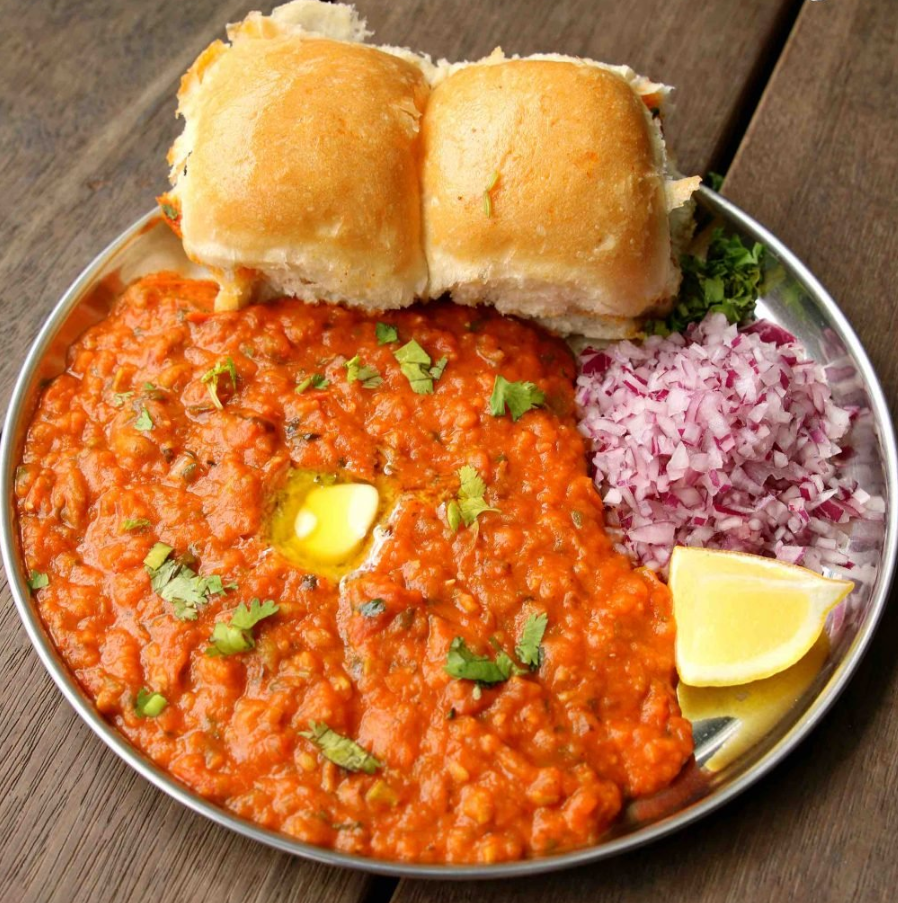
Source: Hebbar’s kitchen

When the plates arrived with raw diced onions and lemon on the side, we would hold it in our hand (kai in tamil) and dig in. Having Gobi 65, Pav bhaji and Bread channa with steam coming from the plate was too much of a treat for us. The pav was toasted with butter and was so good just by itself. And there was a dollop of amul butter on the bhaji.

While I do not remember how much we paid, it was not more than ten rupees for a delightful repast for two little kids with voracious appetites. Things like hygiene and calories was not even a thought in our mind. All that mattered was the delicious food. R was such a master that he would gobble his order super fast and look at me with puppy dog eyes and ask me to share with him. I would relent grudgingly…

Many five star restaurants cannot even come close to the taste of street food from Matta. I do not know if Matta would make it to the late Anthony Bourdain’s Parts Unknown, but it will make it to my list of the best street food that I have had:)
Heart that beats Madras

I love Madras. Having grown up there and thanks to my bicycle, Kinetic Honda, and good friends, I have traveled to every nook and cranny in Madras.

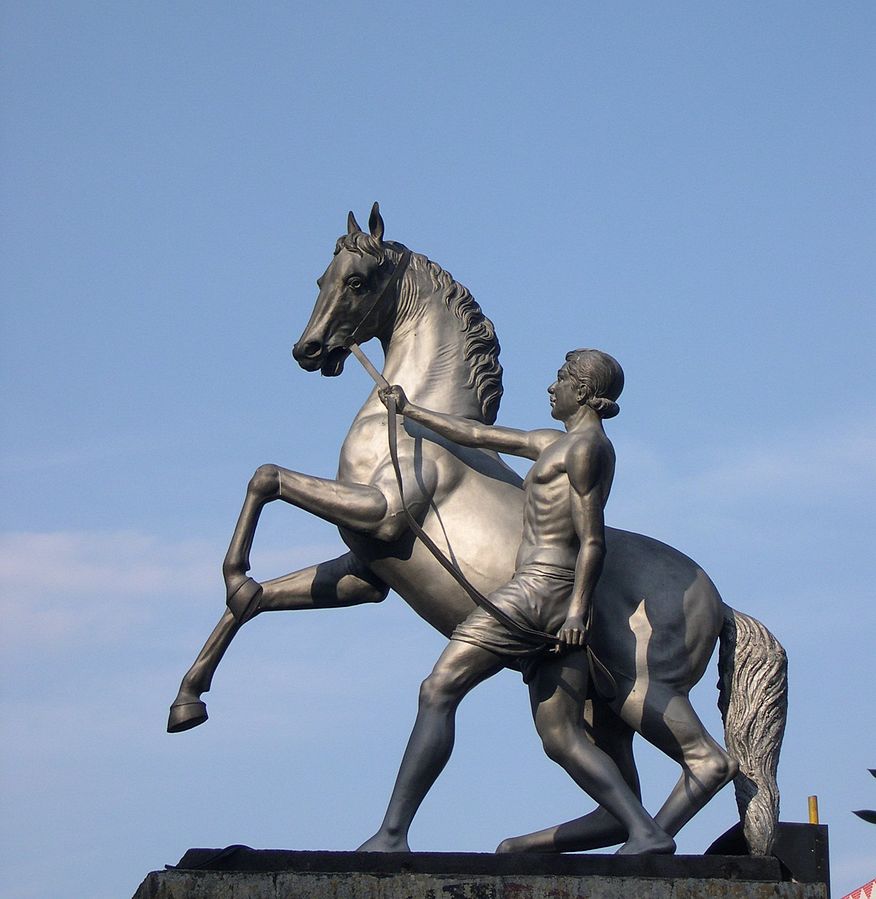
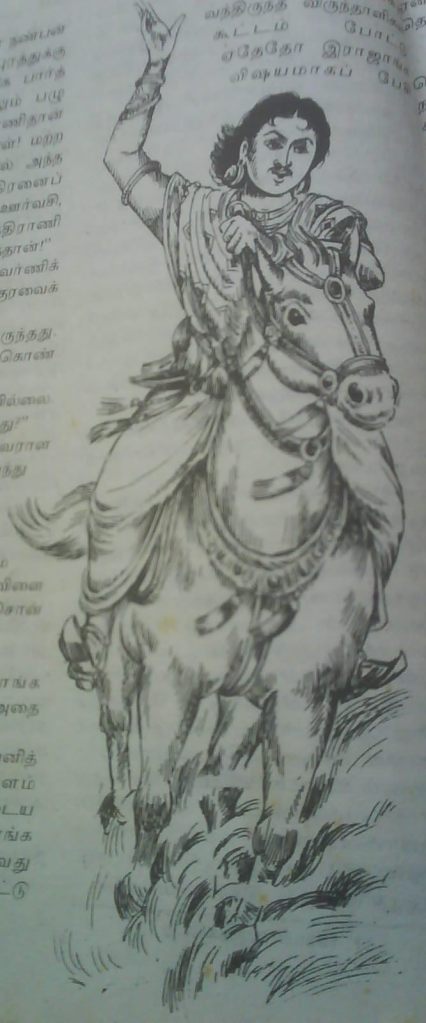
When you think of Madras, one iconic place that comes to mind is the Gemini Flyover. Gemini flyover was built in 1973 and was so called since the lauded Gemini studios used to be there but has since been demolished. One of the landmark statues of Madras is the pair of equestrian statues at the Gemini circle. The statues are meant to celebrate abolition of horse racing and some say the statue was inspired by Vandhiya Thevan from Ponniyin Selvan (Kalki’s epic historical novel). Even though I have driven by the statues and on the flyover thousands of times, I still get a little thrill every time I see it – the statue is impressive if you pause to look at it.

Close to the flyover are many many memories. On the side of Nungambakkam high road with Palimar (looking at you R for giving them a run for their buffet), Landmark book shop which was a hip spot once upon a time, Rani Seethai Hall (so many plays that I have seen with friends); Towards Mt. Road is Safire theater complex with so many Malayalam hit movies (remember High Highness Abdullah and Vandanam) and Spencers (the old regal one!!); and my favorite side is by far the Cathedral road side with Drive-in, US Consulate, Mowbrays Road, Music Academy, and Woodlands (where I got married) – this is the side I call Amma’s side of the city. Amma was at her heart a Mylapore lady and her love spread to me. It is the same side (further down) that had Canopy (remember Romali roti show), Isabel hospital, Rangachari, TNSC Bank Anjaneyar, and ofcourse Luz, Kulam, and Kapaleeshwar koil.

Ahhh..Woodland Drive-in. For many many years, it was a green haven amidst the city with a restaurant tucked away inside. PBS, the yesteryear singer, was a common sighting at Drive-in. Their delicacy was hot Basundhi around 3 pm – they often ran out and so you had to be there at the right time to get it. And who can forget the orange slushy on a hot summer day. In those days, going to restaurants was a rare occurrence for everyone, including us. For us kids, it was a real treat to go to Drive-in and stay in the car and eat.

The restaurant has been closed since Woodland’s lease ran out but I thank that place for so many fond memories as a child and young adult…

Did you get a chance to enjoy Drive-in Woodlands?

Mania and the one hundred rupee note

Growing up, I was the youngest kid in my house. So, I tagged along with Amma (mom) all the time. Amma was an amazing woman with many gifts and storytelling was one such gift. Guess it ran in her family since her father (NSM) was an amazing storyteller. This post is about one such deeply personal story – simple in its contents but deep in meaning to me. And one that I often recall…

In the 1910-1920s, there was a boy named Mani who grew up in a village in India and his family struggled to make ends meet.The boy was a bright young man who walked daily from his village to the next village to attend school. When it was time to attend college, he left his village and moved to a city for college.

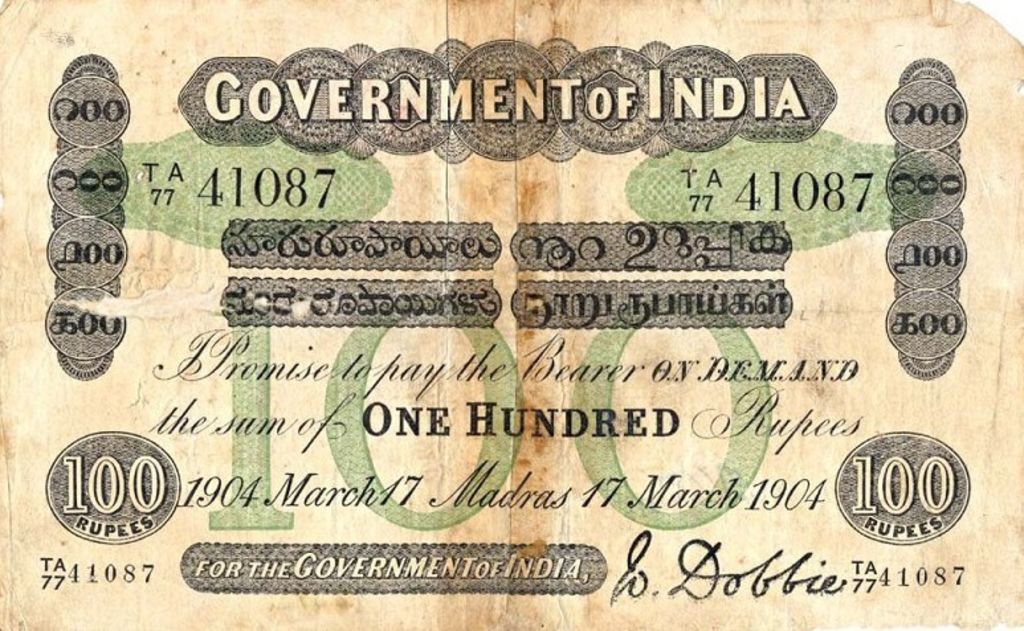
After graduation, Mani landed a job in a college teaching English. He received his paycheck and saved as much as he could. When he saved 100 rupees (Google tells me that is about 5,000 indian rupees in today’s value), he withdrew it from the bank as one hundred rupee note and boarded a train headed for his village.

Banknote Index
Source: Banknote Index

Mani’s father had never seen a hundred rupee note in his life and the boy wanted to surprise his dad with it. He wanted his father to be reassured that his family was going to have better times ahead. Mani could not sleep that night since he wanted to see his father’s reaction to his surprise visit and the hundred rupee note.

When the train pulled into his village station, many people from his village were standing in the station pavement. Mani got down and the villagers rushed to him asking “Mania, yaaru sonna (who told you?); eppidi therinjudhu (how did you know?)?”. Mani was confused and it took him some time to understand that his father had passed away the night before. The villagers, including some of his family members were at the station wondering how to send this news to Mani and have him come right away. They could not fathom how Mani made it to the village that morning. Mani just fell to the ground and was crushed.

The first time my mom told me this story, I cried. Even today, when I tell this story to someone, I tear up. Putting myself in the shoes of Mani, I was anguished and angry. The one thing a parent wants is to see his/her children happy and doing even better than they did; in the same token, (many) children want to meet or exceed their parent’s expectations in every way. Angry and sad that his father could not see that Mani was doing well in life seemed very unfair.

That Mani was NS Mani, my maternal grandfather. We called him Amma Thatha which literally translated to Maternal Grandfather since Amma means Mom and Thatha means Grandfather. Amma Thatha went on to become a much lauded English professor, opened his own college in Madras (I refuse to call it Chennai) and made boatloads of money and a name for himself. He was friends with presidents of India (R. Venkataraman, VV Giri, and Radhakrishnan) and the social elite in Madras in the 1960s and 1970s were frequent guests at this house. Despite all that, the pain of that incident was still fresh in his mind/heart even in his 80s..sometimes life is not fair but it teaches us that the best of highs and the worst of lows are much better spent with our loved ones close to us always. That is the true treasure – cherish it when you have it!

What do you take away from this story?